

Nobody likes a critic. And yet, constructive criticism can be a visual artist’s best friend. Informed feedback can help an artist sharpen their message and refine their technique. This in turn can help them reach a broader audience.
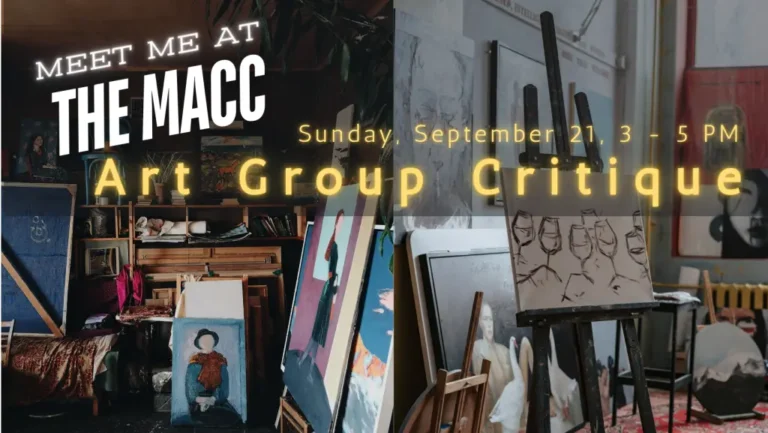
This Sunday, Monthaven Arts and Cultural Center’s Regional Arts Director Ruth Chase will devote her latest Meet Me at the MACC session to the topic of group critiques. The event from 3 to 5 p.m. welcomes local artists at any stage of their practice to share their artwork and connect with their peers in a friendly, growth-focused environment.
A graduate of the San Francisco Art Institute, Ruth is a veteran studio artist with decades of experience showcasing her work. So, we thought this would be a good time to ask her a few questions about Monthaven’s Meet Me at the MACC program and the importance of group critiques.
What is Monthaven’s Meet at the MACC program?
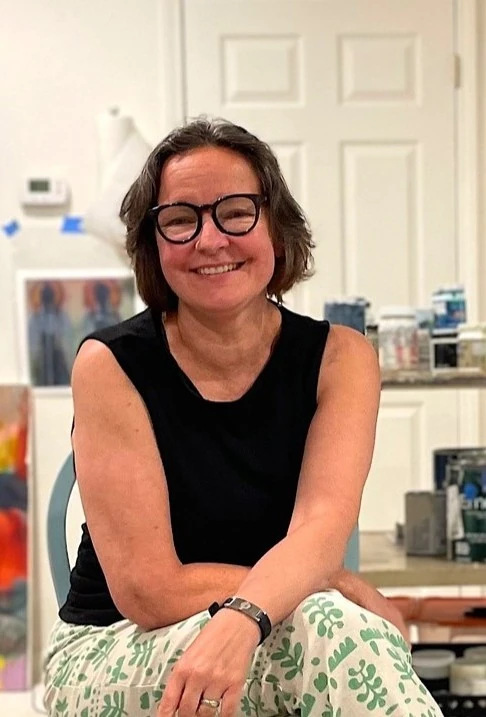
Ruth Chase: Meet Me at the MACC is a program meant to bring local artists together to build community. Being an artist myself, I’ve learned that having a peer community is an important part of my own creative process. A lot of artists, including some very good ones, have never been to art school, and many don’t know much about professional practice. They may be accomplished painters or sculptors, but they don’t know how to publicize their work or sell it. They don’t know how to properly prepare their work for display in a commercial gallery. Those are the sorts of things we talk about at Meet Me at the MACC. One of the crucial things I’ve learned over the years is making sure my artwork is properly labeled. An artwork without a label is like a dog without a tag. If the work is lost or stolen or damaged, you might not be able to find it later. We have a small works exhibit coming up at our Papillon Gallery in November, and we asked artists to provide their name, title and size of their works. About 70 percent of the submissions failed to do this properly, because the artists didn’t know how to do it. Meet Me at the MACC is designed to convey that sort of information.
What are some of the specific topics you’ve covered at prior Meet Me at the MACC sessions?
RC: We’ve covered a lot of topics that artists really need to know but often don’t learn about in art school or in their prior experience. For instance, we’ve talked about networking and about how to effectively use social media. During the MACC’s Salvador Dalí exhibit, we walked around the galleries and talked about different ways to critique works of art. We’ve also had artists who’ve exhibited in our Papillon Gallery give artist talks and presentations.
The next topic is the group critic. Why is this kind of feedback important?
RC: Group critiques are a great way to get to get feedback on your art. It’s easy sometimes for an artist to get lost in their own work. They can’t see that the message they’re trying to communicate is not getting through to the viewer. Constructive criticism, therefore, can help challenge the artist in a healthy way. I always ask artists here at Monthaven to tell me what they’re interested in hearing. The artist might be good using color but will want feedback on their technique. I’ll focus the critique on what they need. I like to get critiques for my own work when they are about two-thirds complete. Critiques are most useful when a work is still in progress.
What’s the most helpful critique you’ve received?
RC: I was lucky enough to have an artist who was about 10 steps ahead of me help prepare for a show. I had 15 pieces that were works-in-progress that she took a look at. She gave me feedback on what she thought was working and what was not working. I didn’t take her criticism as the final word on my work, but she did help me perfect my technique. One thing she observed was that there were too many drips in my painting. The backgrounds of my paintings were arguably too complicated. So, I made the backgrounds a solid gray and used the drips in the subjects. This was not her recommendation, but it was my resolution to the problem she identified. That’s how criticism should work. It should be a two-way dialogue. You’re not looking for an opinion. Five different artists will have five different opinions. You’re looking for helpful guidance.
Finally, the MACC has a small works show coming up in November at our Papillon Gallery, where you serve as curator. Can you tell us a little about this exhibit?
RC: Small works shows are a lot like songwriter nights – they’re a great way for new artists to attract attention. They are certainly a great way for entry-level artists to break into the gallery scene. But, of course, getting the chance to showcase your work means knowing how to follow the gallery’s instructions. Did you fill out the submission form correctly and did you properly photograph your work? We received 300 submissions from about 85 different artists. In such a competitive market, it’s important to get things right. That’s where effective criticism comes in.